
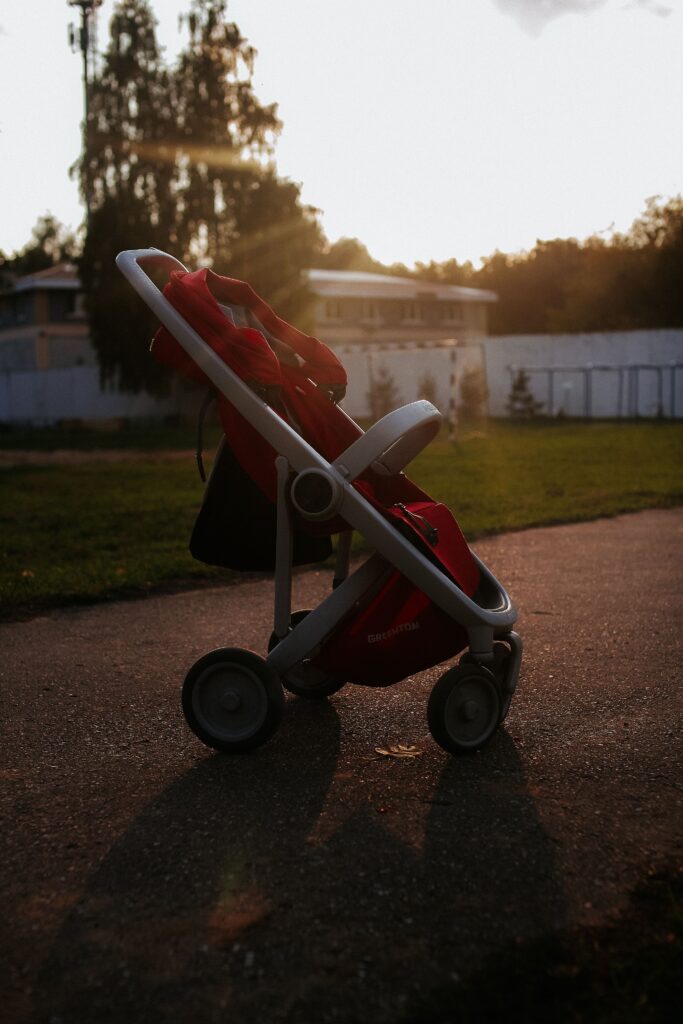
The best travel stroller is the one you can fold with one hand and carry without thinking twice. Everything else, from wheel size to canopy design, comes second. Parents who travel often learn this the hard way: a stroller that performs beautifully on the sidewalk at home can become a burden the moment you reach an airport check-in line or a narrow train aisle. That makes it worth judging a stroller on travel terms before you buy, not after your first flight.
Why the Fold Is the First Thing to Test
A stroller you cannot fold quickly will slow you down exactly when you have the least time. Boarding a plane or loading a rental car happens in a short window. If the fold takes two hands and thirty seconds, you end up holding your child and a half-folded frame at once.
Test the fold in the store or watch a video of it before ordering. A good collapsible stroller folds in one motion and stands on its own once folded. That second part matters more than most parents expect. A folded stroller that stays upright frees both your hands, which is the difference between a calm gate change and a stressful one.
Also check the folded size against airline cabin rules. Some compact models fit in the overhead bin, which means you keep the stroller with you instead of gate-checking it, handing it over at the aircraft door. Gate-checked strollers can come back damaged, and repairs on the road are hard to arrange.
Weight Decides How Far You Can Go
Every pound counts once you carry a stroller up subway stairs or lift it into a trunk several times a day. Full-size strollers often weigh over twenty pounds. That is fine at home, where you rarely lift the frame, but on a trip you lift it constantly.
If you fly or take trains more than once or twice a year, a dedicated light stroller for travel is a smart second stroller. Models built for travel often weigh under fifteen pounds, and the difference is noticeable by the end of a long day. Lighter frames also make it easier for one parent to manage the child and the stroller alone, which happens more often on trips than at home.
Lightweight does not have to mean flimsy. Look for a frame that steers straight with one hand and does not rattle on rough pavement. A cheap umbrella stroller may weigh little, but if it fights you on every curb, the saved pounds cost you comfort.
One more factor worth considering is how the stroller handles the places you are actually planning to visit. Travel does not always mean smooth airport floors and hotel corridors. You may encounter cobblestones, gravel paths, crowded markets, steep sidewalks, or public transport with limited space. Small wheels can make a stroller wonderfully compact, but they may struggle on uneven surfaces, while larger wheels usually provide a smoother ride at the cost of extra bulk. Think about your typical destination rather than choosing based on specifications alone. If you are visiting cities with excellent pavements and relying heavily on trains and planes, compactness may be the priority. If you are planning long walks through older city centers or parks, better suspension and slightly larger wheels can be worth carrying a little extra weight. Also pay attention to the handle height and steering position, especially if more than one adult will use the stroller. A travel stroller should make moving around easier, not force you to adapt your walking style for an entire holiday.
Features Worth Paying For
Once fold and weight are covered, a few features separate a stroller you tolerate from one you enjoy:
- A reclining seat. Children often nap on the move when traveling. A seat that lies nearly flat means the nap actually happens instead of ending in tears.
- A full-coverage canopy. You cannot control the sun on vacation, and a small visor leaves your child squinting. A large canopy with a peekaboo window solves this.
- Usable storage. The basket does not need to be huge, but it should hold a diaper bag and stay reachable when the seat is reclined.
- Car seat compatibility. If you travel with an infant, adapters that click a car seat onto the frame save you from carrying two systems.
Try Before the Trip, Not During It
Buy or borrow the stroller a few weeks before you leave and use it daily. Fold it and carry it up a flight of stairs. Push it fully loaded, too. Any annoyance you notice at home will feel much bigger at an airport, and by testing early you still have time to exchange the model or adjust how you pack. A stroller that has already proven itself on your own streets is one less thing to worry about when you land.